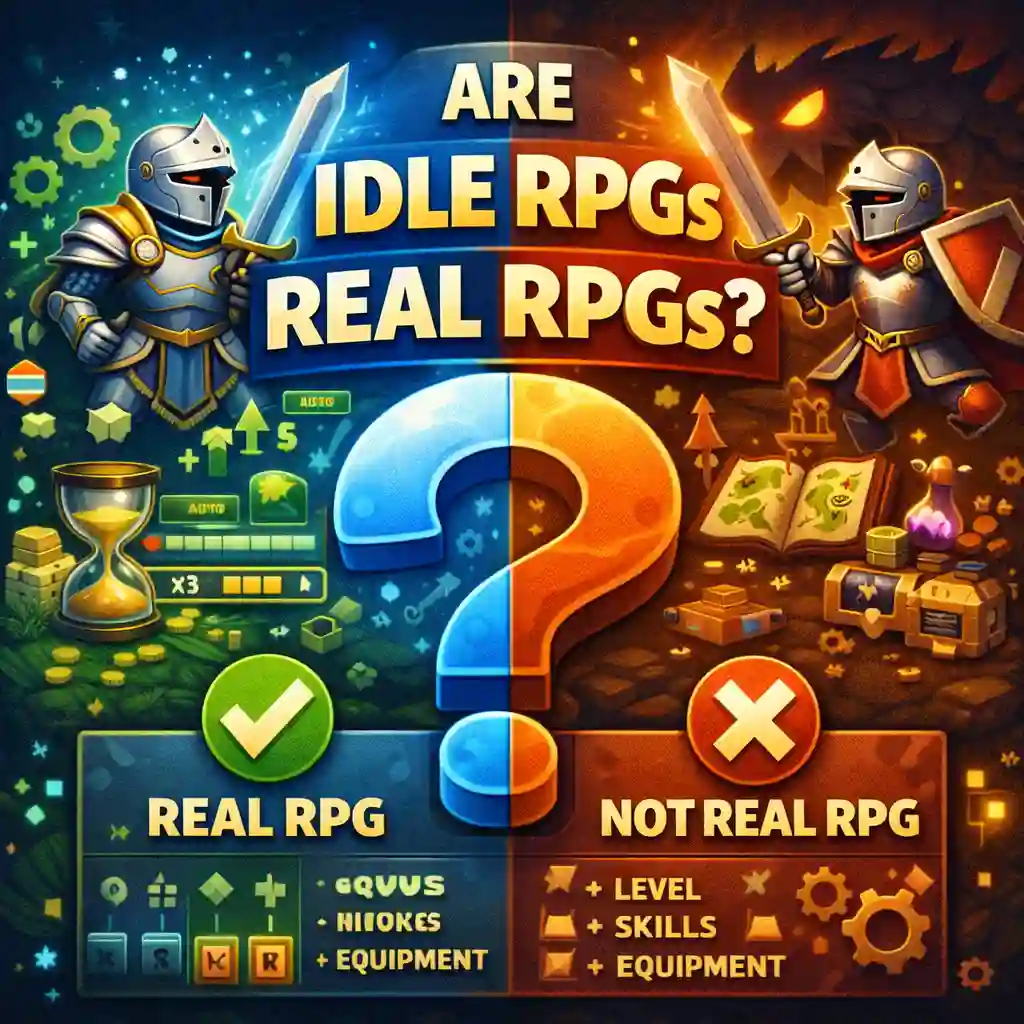
Are Idle RPGs Real RPGs?
Are idle RPGs real RPGs? Explore how automation, character progression, leveling systems, and build optimization determine whether idle RPGs truly belong in the role-playing game genre.
Yes, idle RPGs are considered real RPGs if they include structured character progression systems such as leveling, stats, skills, equipment, and long-term build development. The debate usually centers on automation, not on progression depth. While idle RPGs reduce active combat input, they retain the core structural elements that define the role-playing genre.
Why This Question Even Exists
The debate about whether idle RPGs are “real” RPGs comes from a traditional understanding of the genre.
Historically, RPGs were associated with:
• Manual combat
• Exploration-heavy gameplay
• Story-driven quests
• Direct character control
Because idle RPGs automate many of these actions, some players argue that they lack the hands-on experience traditionally associated with role-playing games.
However, genre classification is based on structure, not input intensity.
What Actually Defines an RPG?
To answer the question properly, we must define what makes a game an RPG.
A game qualifies as an RPG when it includes:
• Persistent character progression
• Leveling systems
• Stat-based scaling
• Skill or ability trees
• Equipment systems
• Long-term build decisions
If these systems meaningfully impact gameplay, the game fits within the RPG category.
For a deeper breakdown of genre criteria, read:
What Makes a Game an RPG?
That article explains the structural foundation behind RPG classification.
Do Idle RPGs Meet These Criteria?
Idle RPGs typically include:
• Character levels
• Damage scaling
• Equipment upgrades
• Skill unlocks
• Companions or party systems
• Build optimization paths
The major difference lies in automation. Combat often runs automatically, and progression continues in the background.
However, automation does not remove RPG identity. It simply changes how progression unfolds.
The player still makes long-term strategic decisions that affect character growth.
Automation vs Role-Playing
The core misunderstanding comes from equating “role-playing” with “manual control.”
Role-playing, in game design terms, refers to developing and progressing a character within a structured system. It does not require constant real-time interaction.
In idle RPGs, players still:
• Allocate stats
• Choose equipment
• Unlock skills
• Optimize builds
• Decide upgrade priorities
The role is still being developed. The difference is that execution is automated while decision-making remains strategic.
Are Idle RPGs Just Incremental Games?
Some critics argue that idle RPGs are simply incremental number-growth games with RPG aesthetics.
While idle RPGs do often rely on scaling systems and exponential progression, many include meaningful build diversity and layered development systems that go beyond pure number inflation.
If progression depth meaningfully changes strategy and long-term outcomes, the RPG identity remains intact.
For a structural comparison, see:
Idle RPG Meaning vs Traditional RPG
That guide explains how idle and traditional formats differ while still sharing RPG foundations.
Genre Evolution in Modern Game Design
Game genres evolve over time. Hybrid genres are common in modern design.
Just as action RPGs blended real-time combat with RPG systems, idle RPGs blend automation with structured character progression.
Genre labels adapt as mechanics evolve. Automation does not invalidate role-playing systems—it modernizes their execution.
If you want a foundational explanation of how idle mechanics integrate with RPG systems, read:
What Is an Idle RPG? Complete Beginner Explanation
That article explains how automation and character progression merge in this hybrid genre.
The Real Answer
Idle RPGs are real RPGs because they retain the structural core of the genre: persistent character progression, stat scaling, skill systems, equipment growth, and meaningful build decisions.
The debate is not about genre identity. It is about design philosophy.
Traditional RPGs prioritize active engagement.
Idle RPGs prioritize optimization and time-based progression.
Both are valid expressions of role-playing game design.
Conclusion
Idle RPGs qualify as real RPGs when they maintain structured character development and meaningful progression systems. Automation changes how players interact with the game, but it does not remove the core elements that define the RPG genre.
The genre has expanded, not diminished.
Idle RPGs are not a replacement for traditional RPGs. They are a modern evolution built on the same foundation of character growth over time.