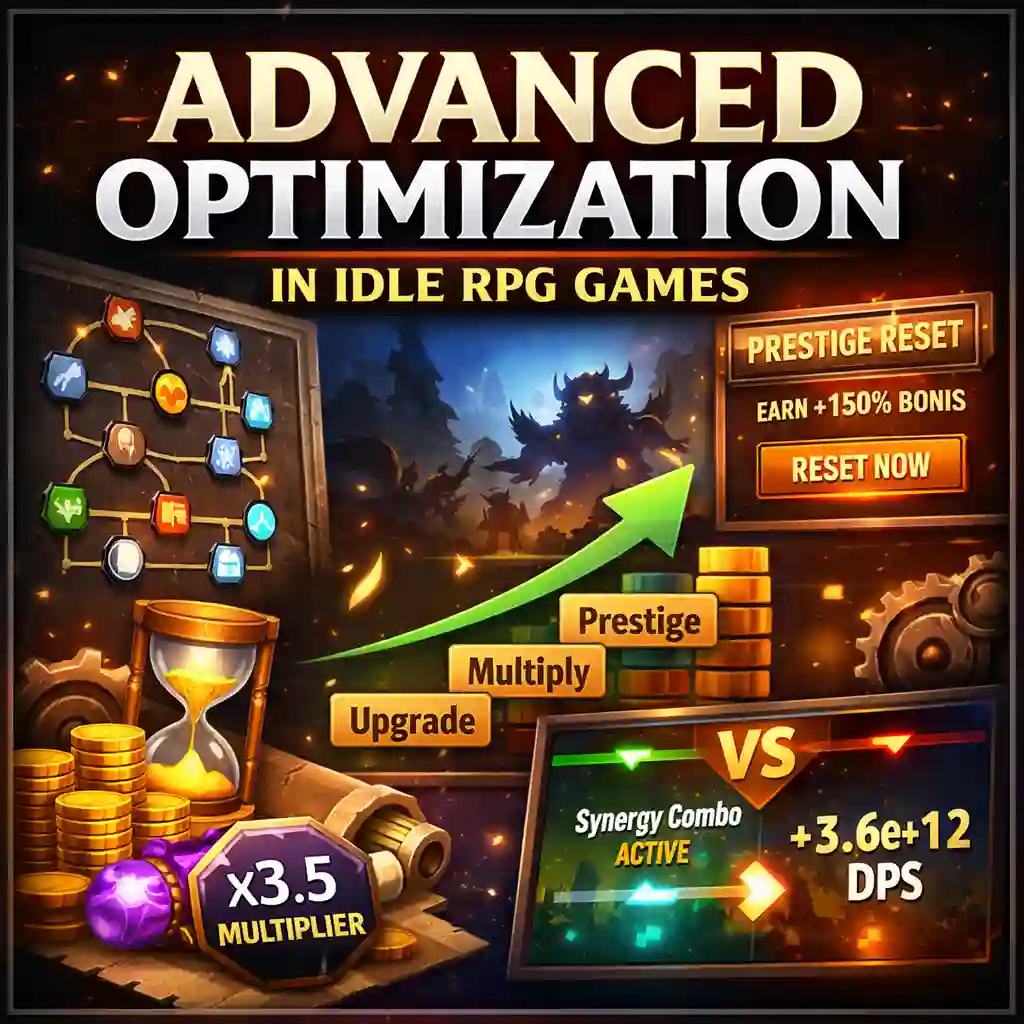
Advanced Optimization in Idle RPG Games
Advanced optimization in idle RPG games explores layered mechanics, multiplier stacking, prestige timing, and strategic sequencing that transform simple number growth into deep, long-term retention and scalable progression systems.
Advanced optimization in idle RPG games refers to layered progression systems, multiplier stacking, synergy timing, and reset-cycle planning that significantly deepen strategy beyond simple number growth. These mechanics increase long-term retention by encouraging experimentation, build refinement, and efficiency analysis across mid- to late-game phases.
Introduction: Optimization Beyond Simple Scaling
Idle RPGs are often misunderstood as games where numbers simply grow automatically over time. While early progression may feel linear, modern titles introduce increasingly complex systems that reward planning and strategic foresight.
If you're new to the genre, you may want to start with our foundational guide, What Is an Idle RPG? Complete Beginner Explanation, which outlines the core mechanics before diving into advanced systems.
Advanced optimization transforms idle gameplay from passive progression into long-term strategic management. Instead of asking “How do I increase DPS?”, players begin asking:
These questions define modern idle RPG depth.
Layered Mechanics: The Foundation of Advanced Systems
Layered mechanics refer to multiple interconnected progression systems that interact with each other rather than functioning independently.
Common layers include:
The key is interaction. A +20% boost may seem minor alone, but when multiplied across several systems, it compounds dramatically.
Modern idle RPG design intentionally creates cross-system dependencies to encourage experimentation and theorycrafting.
Multiplier Stacking and Efficiency Order
One of the most important elements in advanced optimization is understanding how multipliers stack.
Two common stacking types:
The difference is enormous over time.
For example:
At early stages, this difference seems small. In late-game scaling, it becomes exponential.
Players who understand stacking order optimize upgrade timing. Instead of upgrading randomly, they sequence upgrades to maximize compounding effects.
This transforms idle progression into strategic sequencing rather than passive clicking.
Reset Cycle Optimization (Prestige Strategy)
Prestige systems introduce one of the most advanced optimization layers in idle RPGs.
Instead of permanent linear growth, players reset progress in exchange for long-term multipliers.
The optimization challenge becomes:
High-level players calculate efficiency curves. They compare:
This transforms idle gameplay into an economic decision model.
Well-designed prestige systems increase retention because they create recurring strategic cycles rather than a single linear climb.
Strategic Depth in Mid-Game vs Late-Game
Optimization becomes critical during mid-game progression.
In early stages, upgrades are obvious and resources are plentiful. During mid-game, resource scarcity and scaling slowdowns force decision-making.
Typical mid-game optimization includes:
By late-game, complexity increases significantly:
Late-game optimization often resembles systems engineering rather than casual gameplay.
Retention Through Strategic Complexity
Advanced optimization systems are not only about difficulty. They are retention tools.
When players discover:
They develop long-term engagement.
Instead of consuming content quickly, they refine builds, test strategies, and revisit progression loops.
Layered mechanics extend playtime by shifting the focus from grinding to refining.
Why Advanced Optimization Defines Modern Idle RPG Design
Modern idle RPGs no longer rely solely on exponential number growth. They integrate:
These systems create a meta-layer of strategy that exists above visible stats.
For a broader understanding of how these systems fit within the genre’s core structure, revisit What Is an Idle RPG? Complete Beginner Explanation, where foundational mechanics are outlined before diving into optimization layers.
Advanced optimization is what transforms an idle RPG from a passive experience into a strategic ecosystem.
Conclusion
Advanced optimization in idle RPG games represents the evolution of the genre. Through layered mechanics, multiplier stacking, prestige timing, and cross-system synergy, modern idle RPGs create long-term strategic depth.
What begins as simple progression gradually becomes a strategic exercise in efficiency management and systemic interaction.
For players, optimization offers mastery.For designers, it creates retention.For the genre, it defines modern identity.